
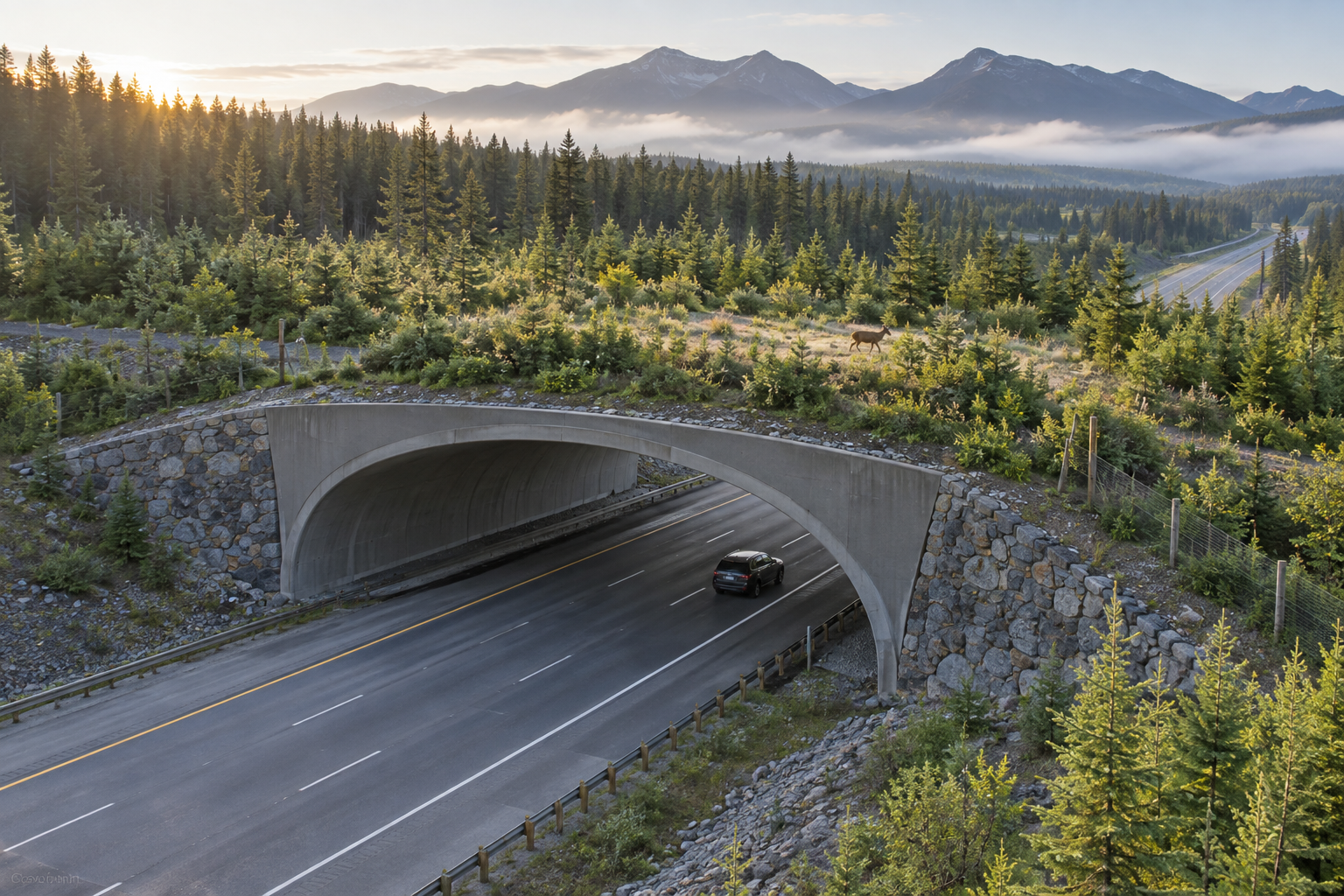
Highways connect people, markets and services, but they can divide forests and grasslands into isolated pieces. For wildlife, a busy road may become a dangerous barrier between feeding areas, seasonal ranges and breeding habitat. Vegetated crossings are increasingly being used to reconnect those landscapes. Built above or below traffic, they guide animals toward safer routes and reduce the number of collisions on surrounding roads.
Design follows animal behavior
A successful corridor is more than a bridge with soil on top. Biologists first identify where animals already attempt to cross by studying tracks, collision reports, camera traps and migration data. Engineers then shape the structure for the species expected to use it. Wide crossings with trees and dense cover may suit deer and large mammals, while smaller tunnels can help amphibians, reptiles and animals that prefer sheltered spaces.
Fencing is often as important as the crossing itself. It directs wildlife away from traffic and toward the safe passage, but it must be maintained carefully. Gaps near drainage channels, damaged sections and poorly designed fence endings can move danger to a different part of the road. Regular inspections and long-term monitoring are therefore built into effective projects.
Evidence grows after construction
Animals may need time to accept a new route. Remote cameras, footprint pads and genetic sampling help researchers measure use without disturbing wildlife. Early visits by a few individuals can gradually become established movement patterns. When animals from separated populations begin to mix, corridors may improve genetic diversity and lower the risks associated with small isolated groups.
Drivers benefit as well. Collisions with large animals cause injuries, vehicle damage and costly road closures. A well-placed crossing can reduce those incidents, especially when combined with lower speeds and warning systems in nearby high-risk sections. The financial value of avoided crashes can strengthen the case for including corridors in transportation budgets.
Connected landscapes require wider planning
No single structure can repair every effect of habitat fragmentation. Animals also need protected land on both sides of the road and safe routes leading toward the crossing. Development, lighting and noise near corridor entrances can undermine an otherwise strong design. Regional planning must therefore protect the larger chain of habitat, not only the bridge itself.
Wildlife crossings show how transportation and conservation can work together when projects begin with reliable data. By treating animal movement as a normal part of infrastructure planning, communities can build safer roads while preserving the ecological connections that healthy landscapes require.