
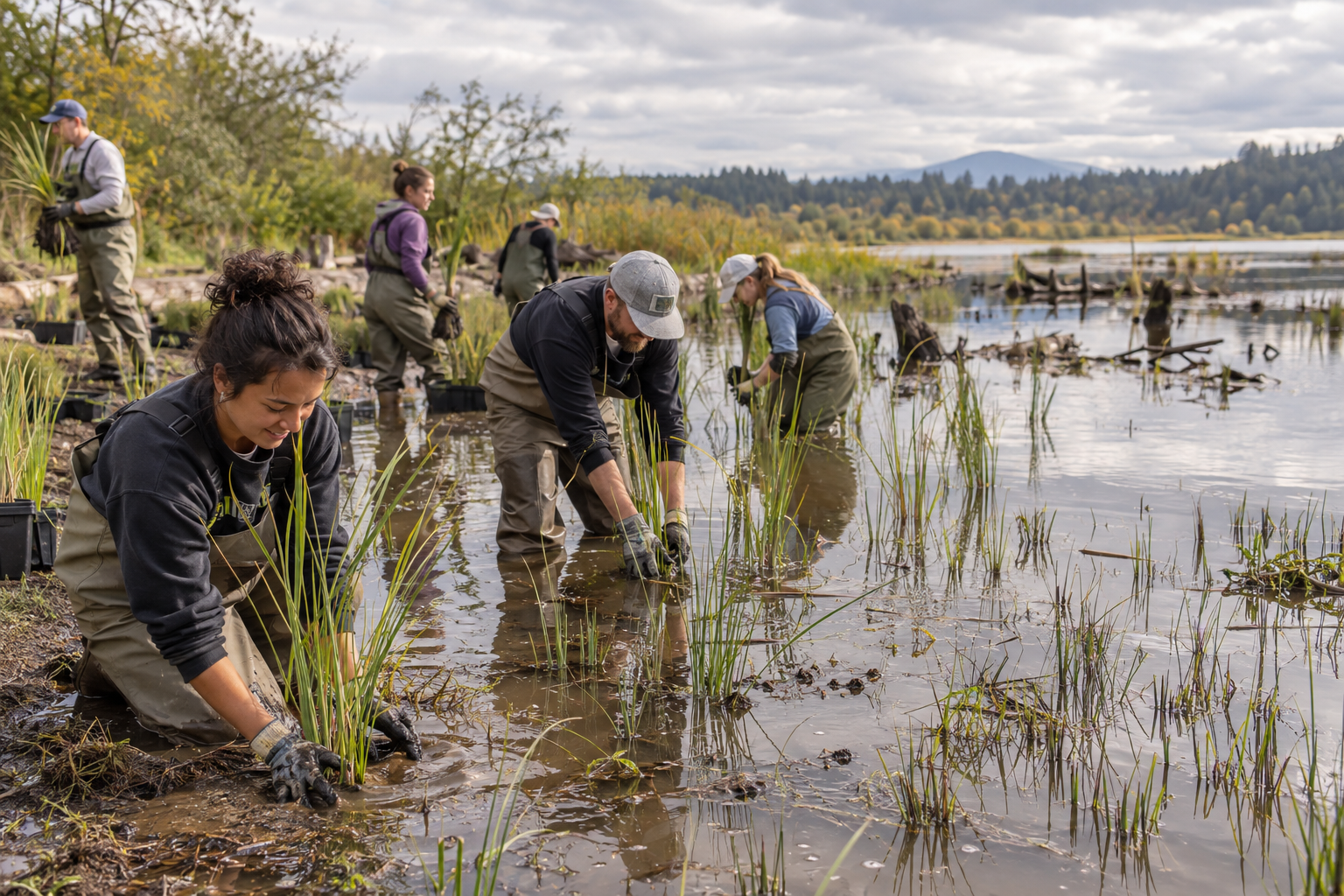
Freshwater wetlands were once treated as unused land, and many were drained, filled or cut off from their natural water sources. Restoration projects are now reversing some of that damage. By reconnecting floodplains, reshaping shallow pools and planting native reeds, communities can improve water quality while creating habitat for birds, fish, insects and amphibians.
Water movement guides the work
Restoration begins with hydrology. Teams study where water enters, how long it remains and whether old ditches or barriers are changing its path. Simply planting vegetation without correcting water flow rarely produces a durable wetland. In some locations, crews remove obsolete drainage structures. Elsewhere, they add low berms or channels that spread water slowly across the site instead of sending it quickly downstream.
Native plants are chosen for different depths and soil conditions. Sedges may stabilize wet edges, while submerged plants create shelter for aquatic life. Planting often happens in stages because water levels can vary unexpectedly during the first seasons. Volunteers can complete much of the hand planting, but specialists monitor whether the right species are establishing and whether invasive plants are taking advantage of disturbed ground.
Wetlands provide several services at once
Healthy wetlands slow stormwater and temporarily store floodwater. Their soils and vegetation trap sediment, while microbes process some nutrients that would otherwise move into rivers and lakes. These functions can reduce pressure on treatment systems and downstream drainage infrastructure. They are especially valuable near growing towns where paved surfaces send water into channels much faster than natural land.
Wildlife responds when the physical conditions improve. Frogs return to shallow pools, waterbirds use open areas for feeding and young fish find refuge among plants. Monitoring teams record these changes through seasonal surveys rather than relying only on how green the site appears. A restored area can look attractive but still lack the water quality or habitat variety needed for a resilient ecosystem.
Long-term stewardship determines success
Wetlands change from year to year. Drought, heavy rain and sediment can alter water levels, while invasive species may require repeated control. Restoration plans therefore include maintenance funding, public access rules and clear responsibility for future decisions. Boardwalks and viewing areas can welcome visitors without sending foot traffic through sensitive habitat.
The strongest projects connect ecological goals with practical community needs. Cleaner water, reduced flood pressure, outdoor education and wildlife recovery can all emerge from the same landscape. That combination makes wetland restoration a lasting investment rather than a short-term beautification effort.