
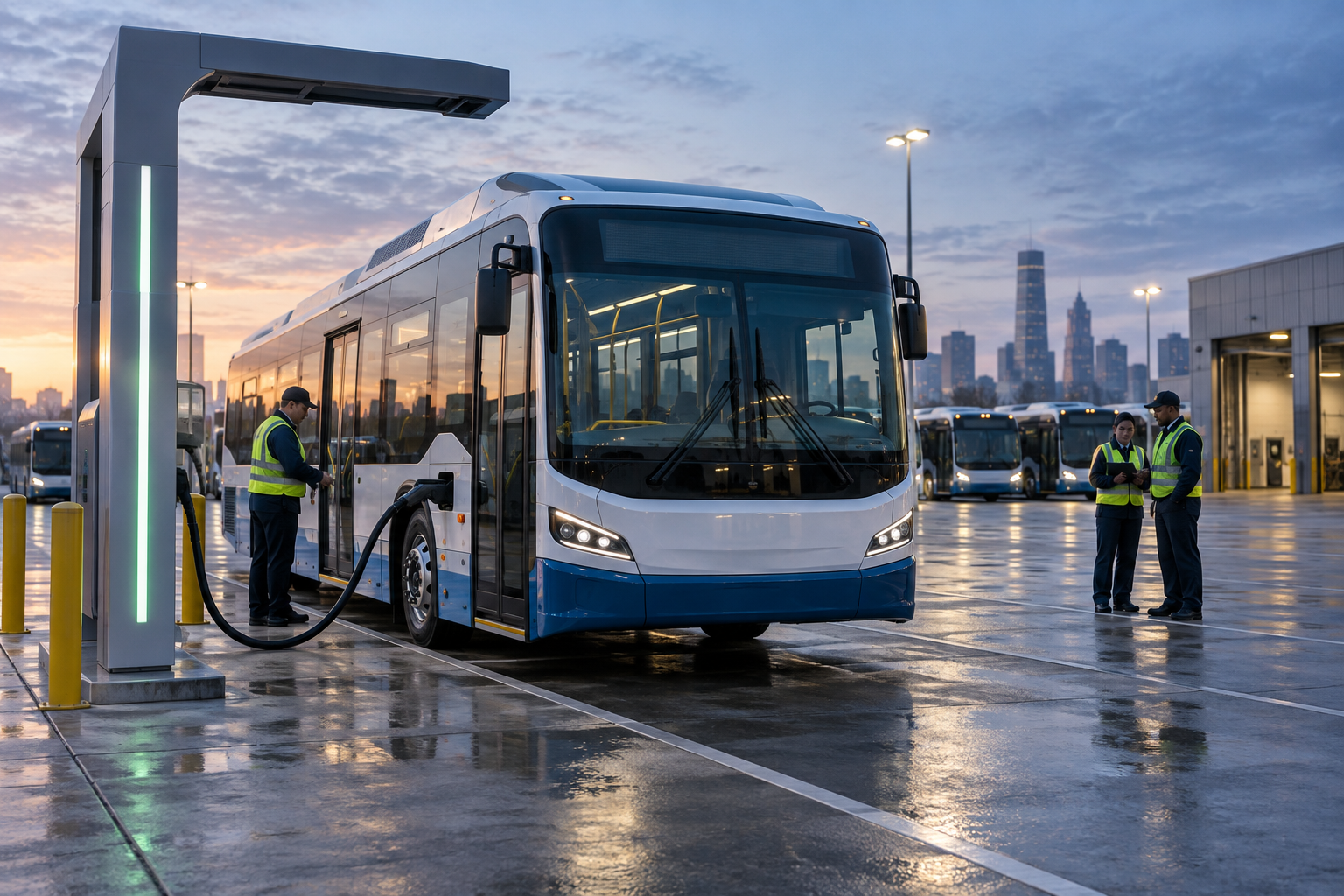
Replacing a diesel bus with an electric model changes more than the vehicle. Transit agencies must also redesign depots, charging schedules, maintenance routines and power connections. A successful electric bus program therefore begins behind the scenes, where vehicles are cleaned, inspected, charged and prepared for reliable service each morning.
Charging plans follow real routes
Buses consume energy differently depending on distance, passenger load, hills, traffic and weather. Agencies analyze route data before deciding how many chargers are needed and when each vehicle should connect. Some buses charge slowly overnight, while others receive shorter high-power sessions during the day. Software can stagger charging to reduce electricity costs and avoid placing excessive demand on the local grid.
Depot layout matters because charging equipment, parking lanes and maintenance bays must work together. Cables should not obstruct workers or moving vehicles. Fire safety systems and emergency access require careful design, especially when many large batteries are stored in one location. Utilities are involved early because new substations or feeder lines may take longer to build than the buses themselves.
Workers need new tools and training
Electric drivetrains have fewer moving parts than diesel engines, but high-voltage systems require specialized procedures. Mechanics learn safe isolation, battery diagnostics and cooling-system maintenance. Drivers receive guidance on regenerative braking and energy-efficient operation. Dispatchers also need accurate information about charge levels so that the right bus is assigned to each route.
The transition can improve working conditions by reducing exhaust and engine noise inside depots. Communities near busy bus corridors may also experience cleaner air, particularly where older diesel vehicles previously accelerated frequently. These health benefits strengthen the case for prioritizing routes through densely populated neighborhoods.
Reliability remains the public test
Passengers judge the program by whether buses arrive on time. Agencies often begin with a limited group of routes, collect seasonal data and expand after identifying problems. Spare charging capacity and backup operating plans protect service during equipment failures or power interruptions. Battery performance is tracked over years, not only during an initial demonstration.
Electric buses are most effective when paired with frequent service, dedicated lanes and convenient connections. Cleaner technology cannot compensate for an unreliable network, but it can support a stronger one. By treating the depot as essential energy infrastructure, cities can reduce transport emissions without sacrificing the dependable service riders need.
Shared technical standards can also simplify purchasing and maintenance across neighboring transit systems, allowing agencies to exchange experience, parts and emergency support as their electric fleets grow.