
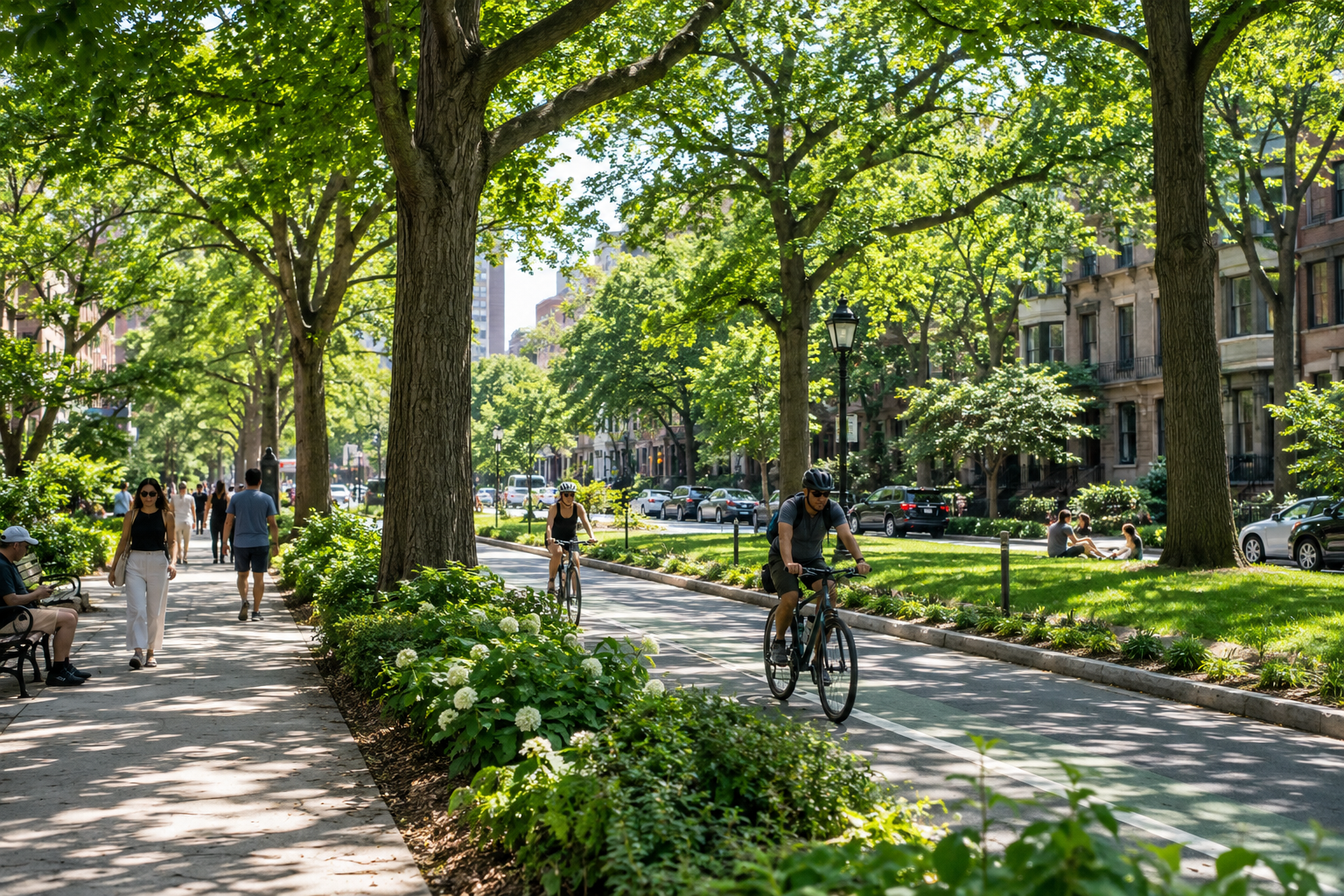
Summer heat is becoming a daily planning challenge for many cities. Streets with dark pavement and little shade can remain dangerously hot long after sunset. Expanding the urban tree canopy is one of the most visible ways to reduce that pressure. Mature trees cool streets through shade and evaporation, while also improving walking routes, public spaces and neighborhood character.
The right tree needs the right space
Planting numbers alone do not guarantee success. Trees need sufficient soil, water and room for roots. A narrow pit surrounded by concrete may support a young tree for several years but prevent it from becoming a large source of shade. Cities are responding with connected soil trenches, permeable surfaces and designs that direct some stormwater toward planting areas.
Species selection must consider future climate, pests, overhead wires and street geometry. Diverse planting reduces the risk that one disease will remove an entire neighborhood canopy. Native species can support local wildlife, but planners also evaluate tolerance to heat, salt and compacted soil. The strongest programs treat trees as long-lived infrastructure rather than decorative objects.
Shade should reach the people who need it
Canopy coverage is often uneven. Wealthier districts may have mature trees while hotter neighborhoods have wider roads, fewer parks and more exposed bus stops. Mapping surface temperatures alongside population data helps cities prioritize schools, senior housing, transit corridors and walking routes. Residents can identify locations that technical models overlook, such as an unshaded path used daily to reach a clinic.
Maintenance determines whether new trees survive. Young trees require watering, pruning and protection from vehicles. Clear responsibility is important when planting occurs between public sidewalks and private property. Community groups can help monitor damage, but municipal budgets must cover professional care during droughts and the safe management of mature branches.
Benefits extend beyond temperature
Tree-lined streets can slow stormwater, filter some air pollutants and make cycling or walking more comfortable. Green corridors also connect parks and provide habitat for birds and insects. These benefits are strongest when planting is coordinated with safer crossings, protected cycle lanes and reliable public transport.
Trees cannot replace building insulation, cooling centers or emergency heat plans. They also take years to provide full shade. That is why cities must protect existing mature trees while planting for the future. A sustained canopy program turns small annual decisions into cooler, healthier streets for decades.
Regular canopy inventories help officials replace failing trees early and measure whether public spending is producing shade where it was promised.