
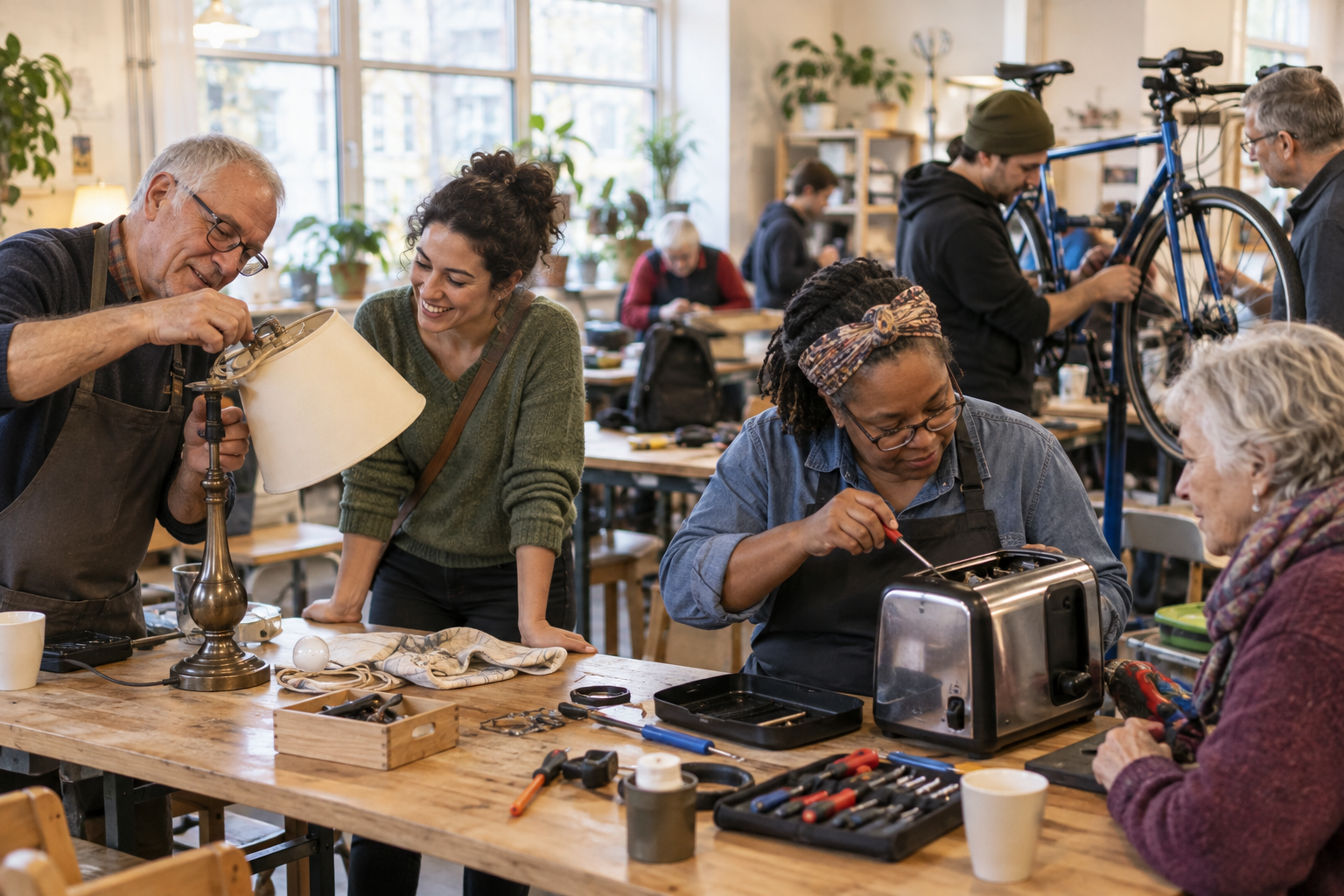
A broken lamp, toaster or bicycle often reaches the waste bin because repair feels difficult or expensive. Community repair cafes offer another path. At scheduled events, volunteers with practical skills sit beside residents and examine damaged household products. The goal is not only to fix an object. It is to help its owner understand what failed and whether the product can remain useful.
Repair becomes a shared learning process
Visitors usually bring small appliances, clothing, furniture, electronics or bicycles. Volunteers begin with basic safety checks and explain each step before opening a device. Some problems are simple: a loose wire, worn cable, blocked mechanism or missing fastener. Others require replacement parts or professional service. Honest advice is valuable even when an item cannot be repaired during the event.
The social setting changes how people experience maintenance. Instead of leaving a product at a counter, owners participate in the diagnosis. They learn how to use tools, find model numbers and recognize common signs of wear. A successful repair can build confidence, while an unsuccessful one may still prevent the purchase of an unsuitable replacement.
Small fixes add up across a neighborhood
Extending product life reduces demand for raw materials, manufacturing and transport. It also keeps bulky items out of local waste systems. Organizers often record the weight and type of repaired goods, creating evidence that can support funding and reveal which products fail most frequently. That information may also strengthen campaigns for better access to spare parts and repair manuals.
Repair cafes depend on clear boundaries. Volunteers need safe workspaces, suitable tools and rules for high-risk equipment. Items containing damaged batteries, gas connections or hazardous materials may require specialist handling. Good events also protect personal data when computers or phones are examined and make clear that volunteers cannot guarantee every repair.
A practical culture of care
Many groups partner with libraries, schools or community centers, which provide accessible space and help reach new participants. Experienced volunteers can mentor younger residents, while local tradespeople may offer demonstrations. Donations cover consumable materials, but the events remain focused on public benefit rather than sales.
Repair cafes will not solve the problem of disposable design on their own. Manufacturers and policymakers still influence whether products can be opened, diagnosed and supported with parts. Yet these gatherings show that maintenance skills remain valuable. They turn waste prevention into a useful local activity and remind people that ownership can include care, curiosity and shared knowledge.