
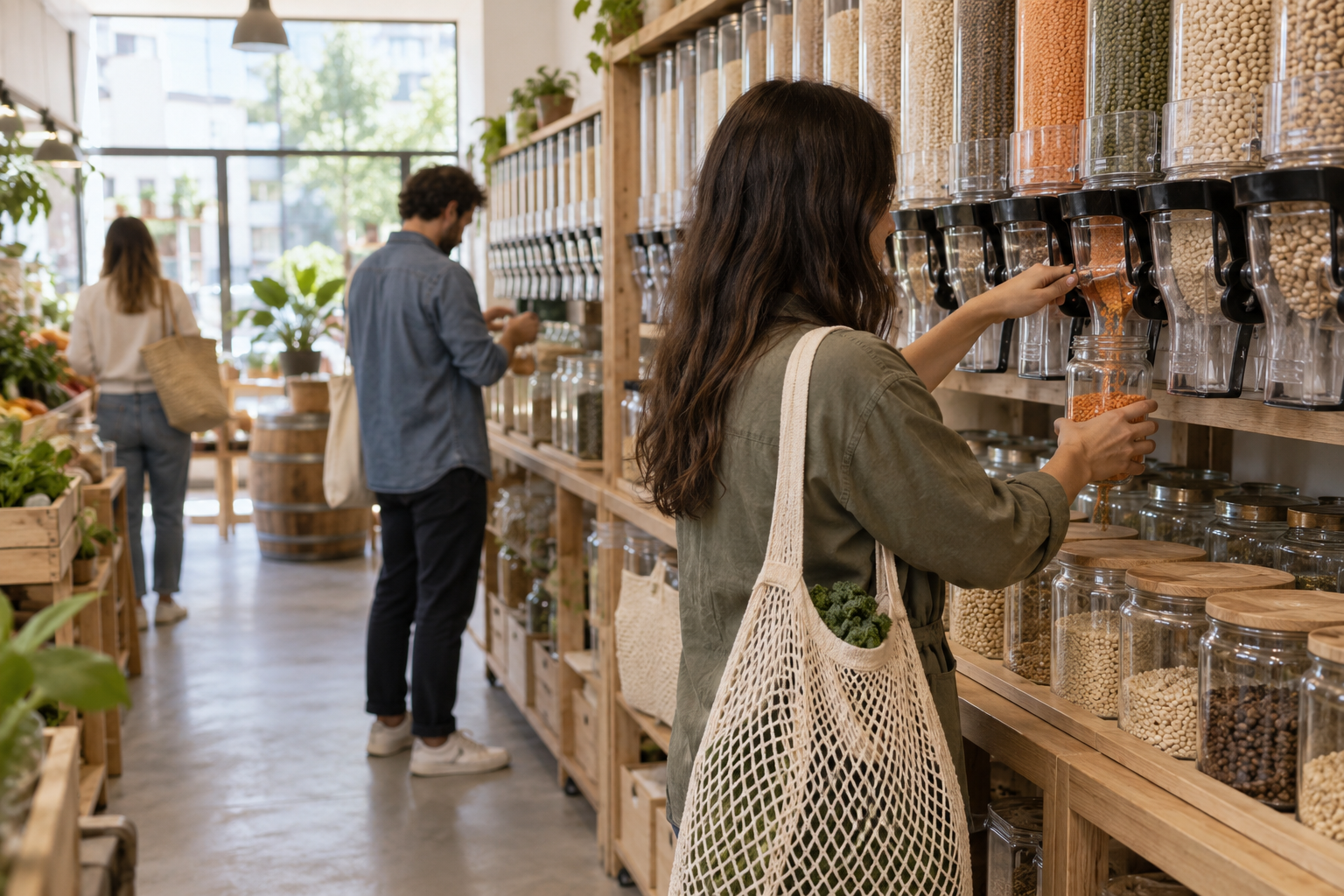
Package-free shopping was once associated with a small range of specialist products. Refill stores are making the idea more practical by offering familiar staples in dispensers and allowing customers to buy only the quantity they need. Grains, beans, pasta, spices, detergents and personal-care products can all be sold through reuse systems when hygiene and labeling are managed carefully.
Convenience determines whether habits last
Customers may bring jars and bottles from home or borrow containers through a deposit program. Stores weigh an empty container, record its tare weight and charge only for the product added. Clear instructions at each station reduce confusion, while wide aisles and easy-to-clean equipment make the process feel as ordinary as conventional shopping.
Pricing matters as much as environmental motivation. Buying small amounts can help households test a product or avoid food waste, but some refill goods remain more expensive because stores purchase from smaller suppliers. Transparent unit prices allow shoppers to compare fairly. Successful shops often balance premium products with basic ingredients used every week.
Packaging reduction requires a complete supply chain
A dispenser on the shop floor does not guarantee that packaging disappeared upstream. Retailers must work with suppliers that deliver in reusable drums, returnable containers or genuinely large formats. Cleaning and transport systems also affect the overall footprint. The strongest programs track how many single-use packages are avoided and how often containers are actually reused.
Food safety rules remain essential. Staff monitor dates, allergens, temperature and cleaning schedules. Labels provide ingredient and preparation information even when the original package is absent. For detergents and cosmetics, containers must be compatible with the product and protected from accidental mixing. These routines make refill systems trustworthy rather than informal.
Small design choices welcome more shoppers
Not everyone arrives with a perfect set of matching jars. Offering clean donated containers, paper bags for dry goods and simple deposit options makes the system accessible to beginners. Some stores provide prefilled returnable packages for customers who are short on time. Digital scales can print clear labels, but staff support is still important during a first visit.
Refill shopping is not a complete answer to household waste, and packaging sometimes protects food from spoilage. Its value is greatest for products that move quickly and can be stored safely in bulk. By combining environmental goals with practical retail design, refill stores make reuse a normal choice rather than a difficult personal project.