
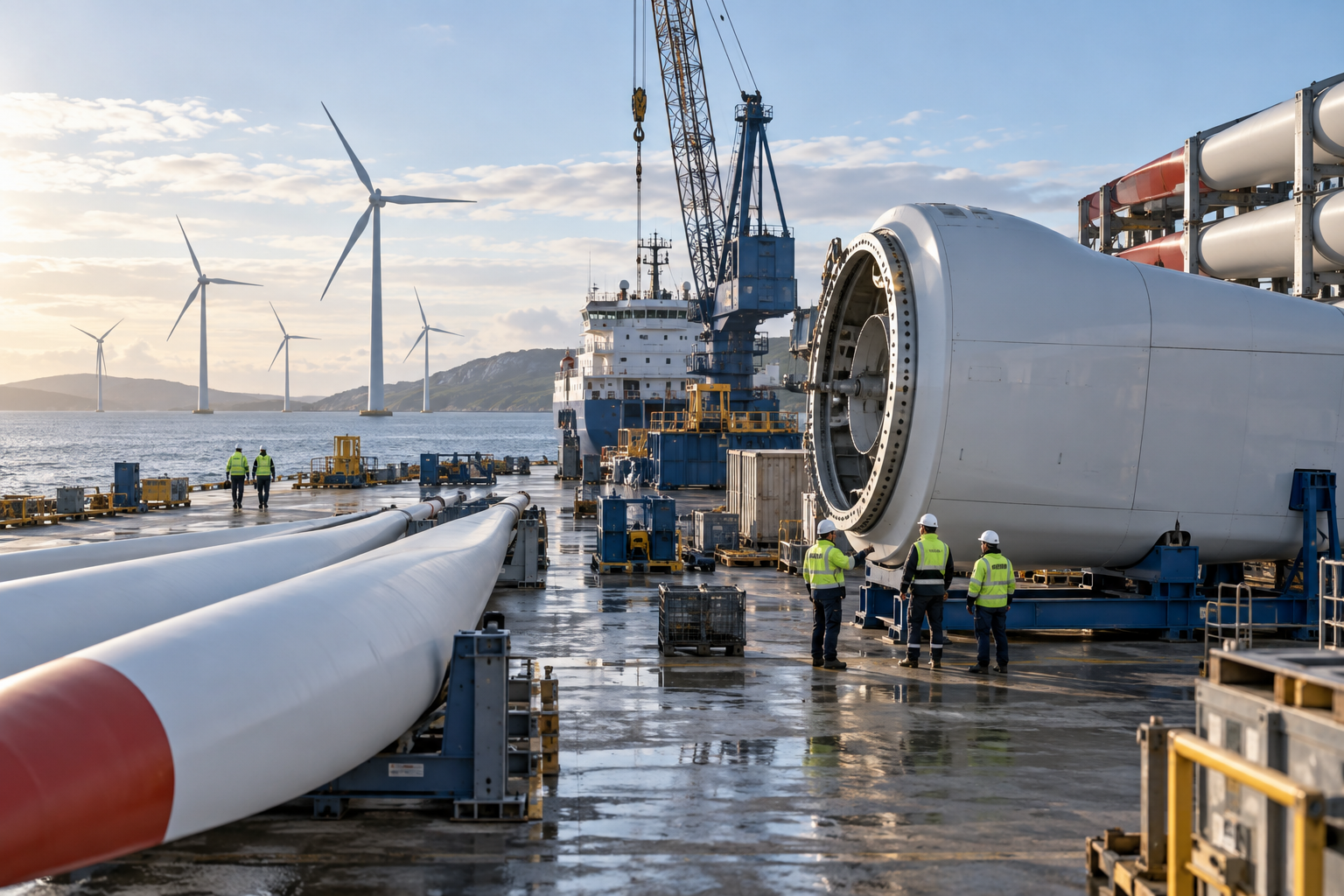
Offshore wind turbines are built at sea, but much of the work begins on land. Coastal ports are adapting docks, storage areas and training programs to handle enormous blades, towers and foundations. These upgrades turn the harbor into a long-term energy hub rather than a temporary construction site, supporting installation today and maintenance for decades.
Heavy components require specialized space
Turbine parts are larger than ordinary cargo and cannot always travel through city streets. Ports need deep berths, strong quays and open areas where components can be stored and assembled. Cranes must lift unusually heavy loads, while traffic plans must keep workers safe around moving equipment. Some harbors reinforce existing docks; others build dedicated terminals away from busy passenger and fishing operations.
The best designs consider the full project life cycle. Installation vessels may dominate the early years, but service boats, spare parts and repair teams remain after construction ends. Warehouses, workshops and reliable connections to road and rail networks become essential. Weather forecasting and marine coordination centers also help crews use short periods of safe conditions efficiently.
Training connects investment with local jobs
Ports can create employment for electricians, welders, mechanics, vessel crews and safety specialists. Yet those opportunities are not automatic. Community colleges and technical programs must align training with the qualifications required by operators. Apprenticeships are particularly useful because offshore work combines industrial skills with strict marine safety rules.
Local businesses may supply tools, protective equipment, catering, transport and environmental monitoring. Clear procurement information helps smaller companies prepare before contracts are awarded. Without that planning, much of the economic activity can bypass the communities hosting the infrastructure, even when the port itself receives major investment.
Environmental safeguards remain necessary
Port expansion can affect shorelines, water quality and existing users. Dredging, construction noise and increased vessel traffic require careful review. Project teams can reduce impacts through seasonal work limits, cleaner harbor equipment and protected routes for fishing boats. Electrifying cranes and service vehicles also prevents a clean-energy terminal from increasing local air pollution.
Offshore wind ports illustrate the physical scale of the energy transition. Turbines at sea depend on dependable facilities, skilled people and long-term planning on shore. When upgrades balance industrial needs with community and environmental priorities, ports can become durable foundations for cleaner regional power.
Regional planning also matters because several wind projects may compete for the same dock space and skilled crews. Coordinated schedules can prevent bottlenecks and help public investment serve more than one developer.