
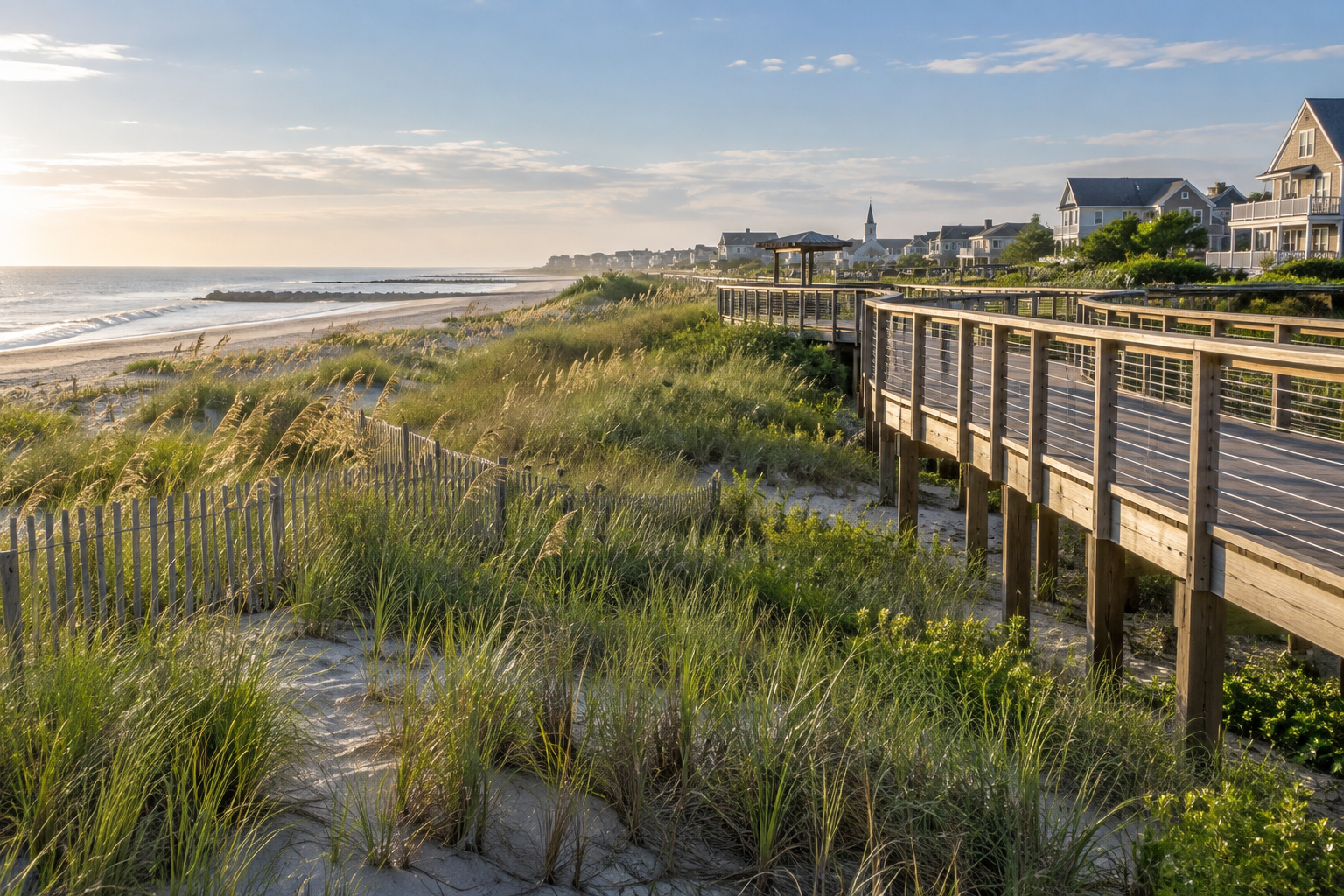
Coastal communities are rediscovering that natural landscapes can be practical infrastructure. In several towns, old seawalls and frequently repaired sand barriers are being supplemented by restored dunes planted with native grasses. The goal is not to stop every wave. It is to create a broad, flexible buffer that absorbs storm energy, holds sand in place and gives water more room before it reaches streets and homes.
Restoration begins with local conditions
Successful dune projects start with careful mapping. Engineers study wind direction, beach profiles, tidal patterns and the routes people use to reach the shore. Ecologists then select grasses and shrubs that tolerate salt, moving sand and seasonal drought. Sand fencing may be installed for a short period, but plants eventually perform most of the stabilizing work. Raised walkways guide visitors over sensitive areas and reduce the informal footpaths that can break apart young dunes.
The work often looks modest during its first year. Small plants are spaced across bare sand, and fences create simple lines along the beach. Over time, wind carries sand into the vegetation, gradually building wider ridges. These ridges can lower the force of waves during storms and reduce routine erosion between major events. They also provide habitat for insects, shorebirds and other species that disappear when beaches are managed as empty recreational surfaces.
Public access remains part of the plan
Residents sometimes worry that restoration will close familiar beaches. Project teams are addressing that concern by designing clear access points, observation platforms and paths that work for wheelchairs and emergency vehicles. Good plans also preserve views and provide signs explaining why certain areas need protection. When people understand the purpose of the landscape, they are more likely to stay on designated routes and report damage early.
Maintenance is essential. Crews replace plants after severe storms, remove invasive species and monitor how sand moves across the site. Local schools and volunteer groups often help with seasonal planting and wildlife surveys. Their involvement reduces costs, but it also turns flood protection into a visible community project instead of a remote engineering program.
A layered defense for an uncertain future
Dunes are not a complete answer to sea-level rise. Dense neighborhoods may still need pumps, drainage upgrades, stronger building standards and carefully placed hard barriers. Yet restored beaches can reduce pressure on those systems and provide everyday benefits that concrete structures cannot. They improve habitat, support tourism and keep shorelines attractive between emergencies.
The strongest coastal strategies use multiple layers of protection and update them as conditions change. By combining natural buffers with reliable public infrastructure, towns can prepare for future storms without separating residents from the water that defines their communities.